
 Save to Pinterest
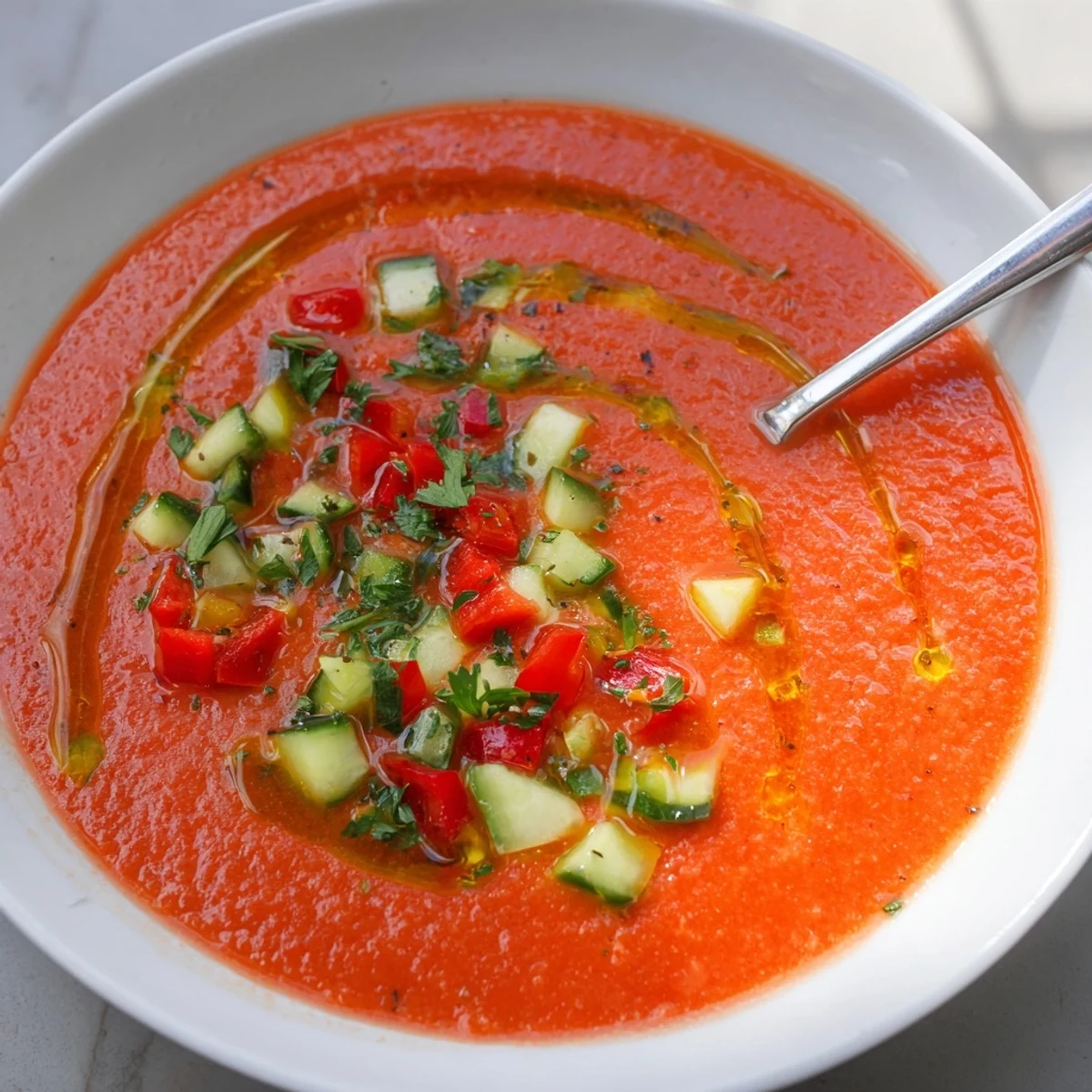
 This vibrant chilled tomato gazpacho brings the essence of Spanish summer cuisine to your table. Blending ripe tomatoes, crisp cucumber, red bell pepper, and aromatic herbs creates a refreshing soup that's perfect for warm weather. The preparation comes together in just 20 minutes using a blender, then chills for at least 2 hours to develop flavors.
Each spoonful delivers bright notes from sherry vinegar balanced with rich extra-virgin olive oil. The texture remains silky-smooth, though you can strain it for an even more refined finish. Top with diced vegetables, fresh herbs, or croutons to add crunch and contrast. This versatile dish suits vegetarian, vegan, and gluten-free diets while offering a light yet satisfying start to any meal.
The air conditioning broke during a July heat wave, and my apartment felt like the inside of a greenhouse left on a windowsill. Opening the fridge revealed a pile of tomatoes from the farmers market, practically bursting out of their skins and smelling like concentrated sunshine. Rather than suffer over a hot stove, I threw everything into the blender and discovered that cold soup is not a compromise but a revelation.
My friend Marta, who grew up near Seville, once watched me make this and gently corrected my technique by handing me a better vinegar and telling me to stop being shy with the olive oil. That small intervention changed everything about how I approach this soup.
Ingredients
- Ripe tomatoes (800 g): The entire personality of this soup depends on tomatoes that are truly ripe, almost embarrassingly soft, and fragrant enough to perfume a room.
- Cucumber (1 medium): Peeled and seeded because the skin adds bitterness and the seeds water things down more than you want.
- Red bell pepper (1 medium): Adds a sweetness that rounds out the acidity of the tomatoes beautifully.
- Red onion (1 small): Provides a sharp bite that keeps the soup from tasting flat, but go easy if yours is particularly pungent.
- Garlic (2 cloves): Raw garlic is powerful here, so use fresh cloves and avoid any that have sprouted green centers.
- Fresh parsley or cilantro (2 tbsp): Parsley is more traditional, but cilantro gives a lovely twist if you are feeling adventurous.
- Extra virgin olive oil (4 tbsp): This is not the place for your cheapest oil, since its fruitiness is a core flavor in the finished soup.
- Sherry vinegar (2 tbsp): Authentic Spanish flavor comes from sherry vinegar, though red wine vinegar will work in a pinch.
- Cold water (250 ml): Adjusts the consistency to something spoonable rather than paste like.
- Sea salt and black pepper: Season generously at first, then taste and adjust after the soup has chilled.
Instructions
- Load up the blender:
- Toss in the chopped tomatoes, cucumber, red bell pepper, onion, garlic, and herbs. Pulse until mostly smooth, leaving just a bit of texture if you prefer some body.
- Add the liquids:
- Pour in the olive oil, vinegar, and cold water along with the salt and pepper. Blend again until everything is thoroughly combined and the color deepens to a rich coral.
- Taste and tweak:
- Sample the soup now and trust your palate. A splash more vinegar lifts everything, while a little extra water loosens it if it feels too thick.
- Strain if desired:
- For a silky restaurant style texture, press the soup through a fine mesh sieve using the back of a ladle. This step is optional but lovely for elegant serving.
- Chill thoroughly:
- Transfer to a covered container and refrigerate for at least two hours so the flavors marry and the temperature drops to something truly refreshing.
- Serve with flair:
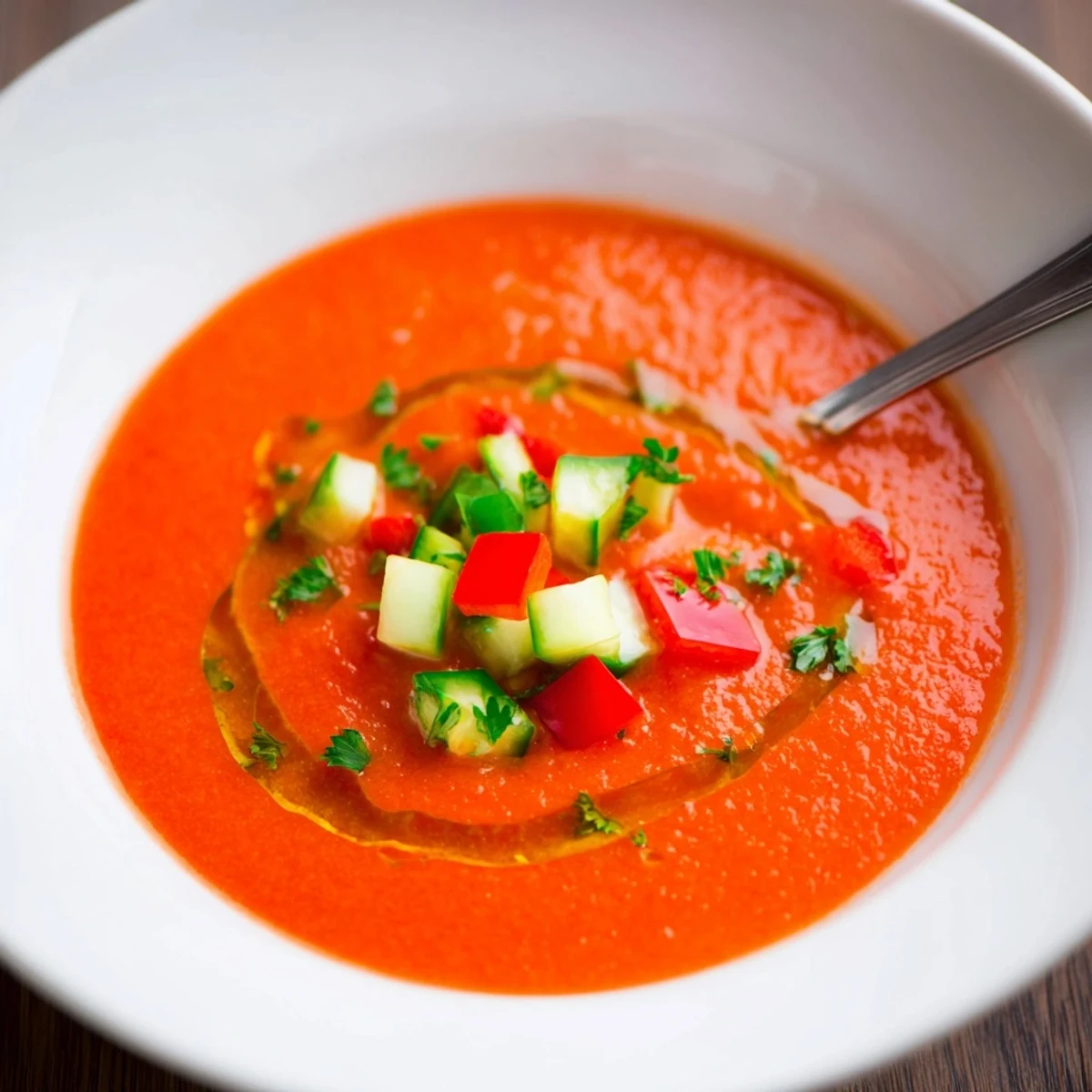
- Give it a good stir, pour into shallow bowls, and scatter your chosen garnishes over the top with a generous final drizzle of your best olive oil.
 Save to Pinterest
 I once packed a thermos of gazpacho for a beach picnic and watched a skeptical friend drink the whole thing in silence before asking for the recipe.
Choosing the Right Tomatoes
Supermarket tomatoes in January will let you down here in ways that no amount of seasoning can fix. Seek out heirlooms, vine ripened, or any tomato that yields slightly to pressure and smells like a garden at the stem end. Farmers market varieties with odd shapes and imperfect skin are usually the sweetest and most flavorful choice you can make.
The Bread Question
Traditional gazpacho often includes a slice of stale bread soaked in water, blended right into the soup to give it a creamy, velvety body without any dairy. Skip this if you need to keep the recipe gluten free, but if that is not a concern, it is absolutely worth trying at least once to experience the textural difference.
Serving and Storing
Gazpacho keeps beautifully in the refrigerator for up to three days, and many people insist it is actually better on day two. Store it in a glass container with a tight lid and give it a vigorous stir before serving since separation is natural.
- Freeze leftovers in ice cube trays for instant chilled soup bases or savory popsicles.
- Serve in chilled bowls or even glasses for a casual, elegant presentation.
- Always taste for salt again right before serving since cold dulls the perception of seasoning.
 Save to Pinterest
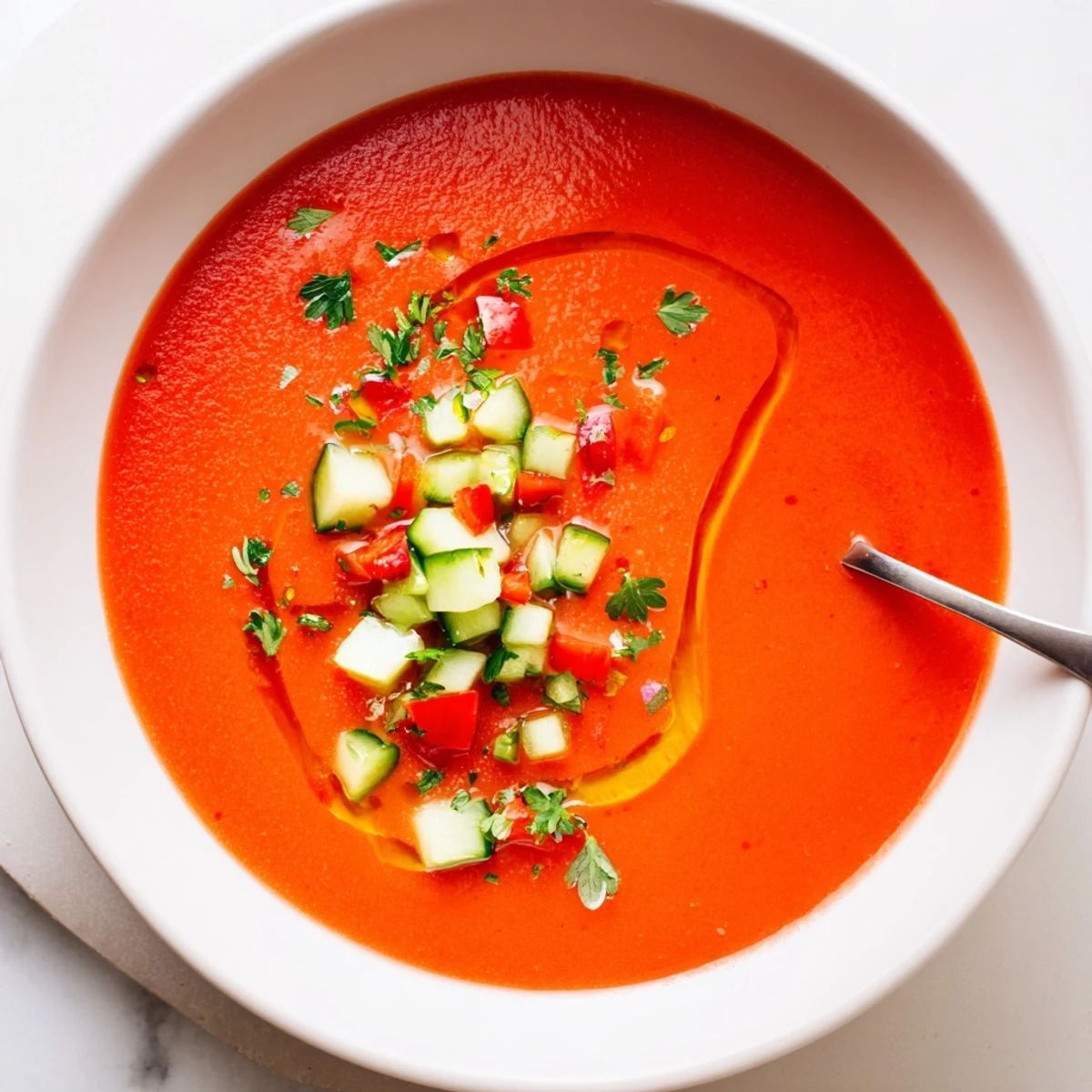
 A bowl of gazpacho on a hot afternoon is proof that the simplest food, made with patience and honest ingredients, can feel like the most luxurious thing you have ever eaten.
Your Questions Answered
- → How long should gazpacho chill before serving?
-
Refrigerate the gazpacho for at least 2 hours until thoroughly chilled. This resting period allows the flavors to meld together and develop depth. You can prepare it up to 24 hours in advance—the taste actually improves with time.
- → Can I freeze gazpacho for later?
-
Yes, gazpacho freezes well for up to 3 months. Store in airtight containers leaving some space for expansion. Thaw overnight in the refrigerator before serving. Note that the texture may become slightly thinner after freezing, but the flavor remains excellent.
- → What type of tomatoes work best?
-
Use the ripest, juiciest tomatoes available—vine-ripened or heirloom varieties yield superior flavor. Avoid mealy or underripe tomatoes as they won't blend smoothly. The quality of your tomatoes directly impacts the final taste, so choose wisely during peak summer season.
- → Is straining the soup necessary?
-
Straining through a fine-mesh sieve is optional and depends on your preferred texture. Unstrained gazpacho has more body and fiber, while straining creates an ultra-smooth, elegant consistency. Both versions taste delicious—choose based on your personal preference and dining occasion.
- → Can I make gazpacho without a blender?
-
While a blender makes the process quick and easy, you can use a food processor or immersion blender instead. For a truly traditional approach, grate the vegetables finely by hand and mix with liquids. The texture will be chunkier but still flavorful and refreshing.